Market intelligence:
The U.S. tariff divide


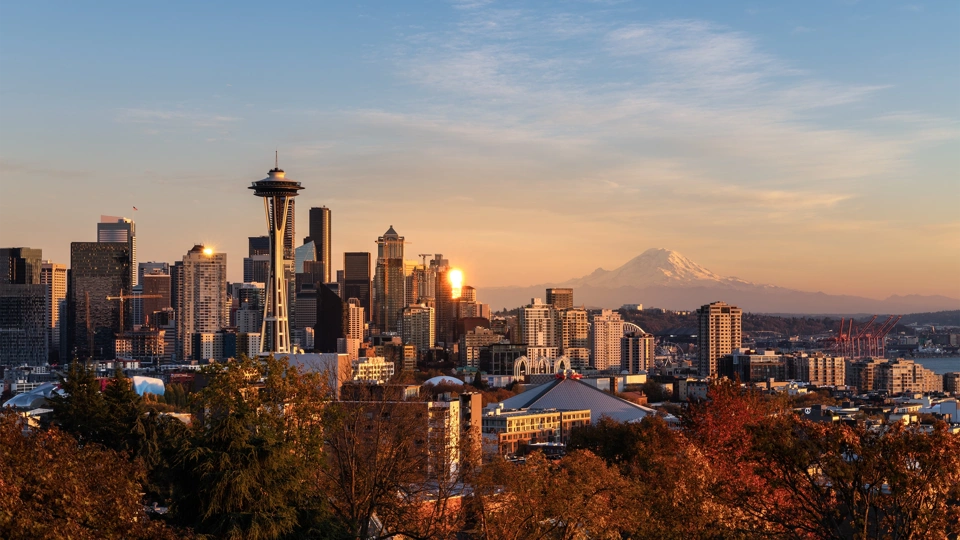

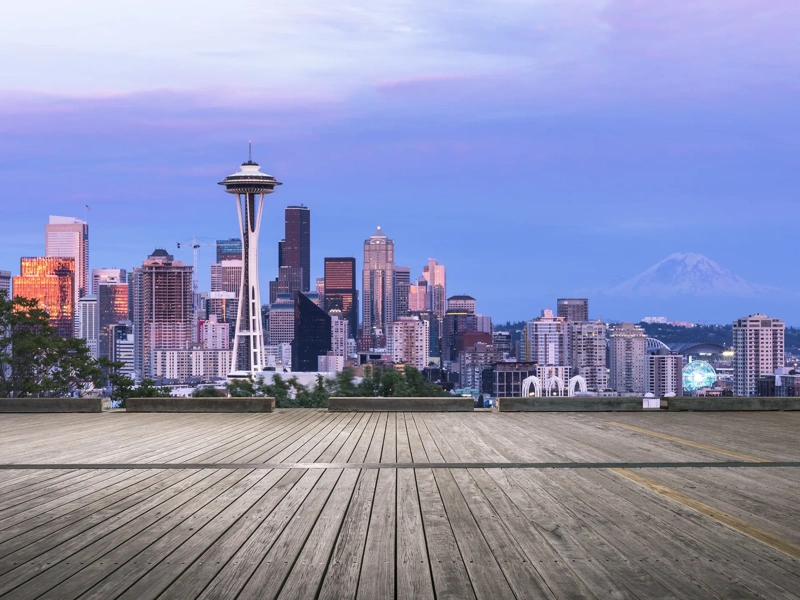
Home to the headquarters of global technology titans Microsoft, Amazon and Expedia, Seattle teems with talent and acts as a magnet for highly educated, ambitious young graduates from across the United States and beyond. This collective growth mindset and reputation for innovation means the city remains front and center for new projects that seek to push boundaries.
The rich array of skill sets in Seattle is part of the secret behind the Emerald City’s success. Here, companies can build highly effective teams that embrace the famed West Coast open-mindedness to new ways of working and disruptive innovation. It’s no surprise that Seattle’s construction market is marked by a strong commitment to sustainable building practices.
“The can-do attitude is infectious and brings to projects the belief that anything is possible.”
It also stands in contrast to more conservative corporate cultures, such as those prevailing in New York or Boston, where a more traditional approach to client-consultant relationships can mean blue-sky thinking is viewed with suspicion and there’s resistance to adopting new practices.
Renowned for their complexity, data center buildouts embody Seattle’s reputation for innovation, and—when delivered on time and on budget—serve as powerful showcases for those involved in bringing them to fruition.
With its established technology industry and access to labor, most notably software engineers, Seattle is well positioned to remain a hub for global corporate headquarters.
The city still retains an unmatched allure for technology firms, and the palpably high levels of ingenuity give it the feel of a start-up hub.
That said, there are warning signs it could become a victim of its own success, with high city taxes meaning even a big hitter like Amazon has felt compelled to explore more cost-effective options across the water in the city of Bellevue for some of its facilities.
The legacy of the COVID-19 pandemic also continues to cause disruption, with factory shutdowns, long lead times, supply shortages of materials and labor, rising inflation, high interest rates and industrial action combining to drive up costs, with events quickly overtaking agreed schedules and budgets.
“Although Seattle’s sound market fundamentals act to ensure there are no shortage of big-ticket projects still being greenlighted, this headline masks a story of winners and losers.”
On the one hand, there is high-profile development of the Seattle Waterfront to reconnect the shoreline with the city and a boom in Eastside projects driven by demand from Amazon and Meta; while on the other, there are swaths of empty office space in the downtown district, as firms struggle to reverse the lockdown-induced work-from-home phenomenon. High crime rates compound the problem, so any downtown revival is likely to be led by smaller companies taking over the leases of larger corporates.
Other firms have long favored lower-profile locations in the Pacific Northwest; among them semiconductor business Micron, which is building a vast new multibillion-dollar facility to manufacture microchips in Boise, Idaho. This is being developed against a US-wide legislative backdrop that seeks to promote onshoring—in this case, the CHIPS Act, designed to reduce dependency on Taiwan.
While mega-projects like this point to growth and frontiers of opportunity, it is important to note the technology sector is no sure thing and recent job layoffs add weight to this notion.
“Fortunately, in Seattle and surrounds there exists vibrant life outside the world of technology.”
This is evident in both dynamic, pioneering fields like life sciences, where the city is ranked number four in a market exhibiting huge growth potential, as well as in legacy industries like aerospace.
Seattle Genetics, a global biotechnology company dedicated to revolutionizing cancer care, epitomizes Seattle’s diversified nature, while the globally renowned aerospace icon Boeing has a major presence in the city that stretches back over a hundred years.
And in the critical infrastructure space, Seattle’s Sea-Tac International Airport is scheduled for major redevelopment to meet projected demand, benefitting from funds made available via the 2021 Bipartisan Infrastructure Law. However, with scope for expansion limited, this is likely to see a new airport location approved, bringing with it significant investment into the region.
Seattle’s pledge to reduce building emissions by 39% by 2030 has served to focus the minds of all project stakeholders involved in the journey from drawing board to completion.
One effect has been a significant rise in mass timber buildings across the Pacific Northwest.
Such constructions, sourced from responsibly managed local sources, not only offer lower-carbon alternatives to concrete and steel, but are also more aesthetically pleasing, faster to build and, in certain instances, can speak to enhanced safety.
Despite notable headwinds:
Sign up for our newsletter - trends, market intelligence and expert perspectives.
Sign up for our newsletter - trends, market intelligence and expert perspectives.