Market intelligence:
The U.S. tariff divide


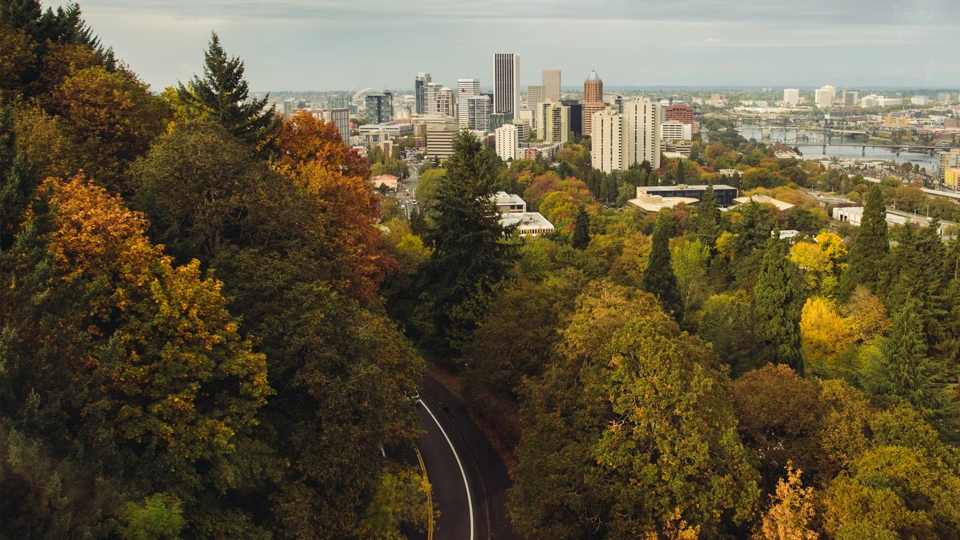

Attracted to the outdoor culture of the Pacific Northwest, progressive technology giants and athleisure brands are embracing new construction approaches—including mass timber as a more sustainable building material for their facilities. That support is helping position Portland, Oregon as an international hub for mass timber design, construction, and thought leadership.
With corporate leaders, Microsoft and Amazon headquartered in Seattle and Google and Facebook with a significant presence, the broader region that Portland sits within—and draws talent from—has become synonymous with innovation and early adoption.
“This culture of reinvention and change is reinforced by tech start-ups setting up shop in Portland, a more affordable prospect than its neighbors Silicon Valley and Seattle.”
Alongside a range of tax incentives that make real estate even more affordable, this translates to companies having more to invest in shaping a built environment that inspires their workforces and helps fuel creativity.
Climate change has sharpened the focus on sustainability in construction—for architects and end users alike. In the commercial real estate market, that focus has become intensely competitive, particularly following 2020’s widespread shift to working from home. As a result, anything that helps keep rental yields strong shouldn’t be overlooked.
Consequently, in Portland and elsewhere across the United States, mass timber projects are poised to move from niche to mainstream. This momentum is supported by the imminent ratification in 2021 of updates to the International Building Code (IBC), which will govern the material’s use in structures up to 18 stories high and nearly one million square feet in area.
Beyond allowable building size, the code also addresses fire-resistance ratings, fire safety during construction, and new allowances for exposed timber versus wood with non-combustible protection.
“This evolution from performance-based to prescriptive design, creating certainty regarding mass timber’s capabilities and therefore instilling confidence in project stakeholders.”
The 2021 IBC changes enabling taller mass timber buildings are expected to increase demand by expanding the range of projects where the material can be used. While this raises the possibility of near-term supply constraints—as multifamily residential and speculative developments add to demand—this may be short-lived as new suppliers enter the market to meet the growing need for this renewable material.
While large-scale mass timber use in high-rise construction is still in its early stages across the U.S., advances in fabrication technology are driving more affordable and standardized pricing. In addition, the incoming Biden/Harris administration has committed the U.S. to rejoining the Paris Climate Agreement.
“This means Portland’s mass timber fortunes could receive a further boost in the form of federal incentives and tax breaks to allow it to play its part in helping reduce the nation’s carbon footprint.”
Securing the right construction permits can be challenging for developers, though fast-track options exist in Portland. Although mass timber can cost more to produce, its ability to be fabricated offsite means it can be installed quickly, which can benefit project schedules. Ready access to raw material in the heavily forested Pacific Northwest also helps keep the supply chain domestic and delivery times short.
The codification of mass timber is a watershed moment for this renewable material, helping address longstanding concerns by demonstrating credible fire-resistance performance. It also underscores mass timber’s resilience in seismic conditions, given it’s a significantly lighter material to handle and is less energy-intensive to produce than steel and concrete.
“As one of the country’s greenest cities, it is no surprise that Portland is adopting mass timber at a fast rate.”
With abundant access to timber, legislation supporting taller construction, and forward-thinking businesses increasingly looking to reduce their carbon footprint through real estate, Portland is well positioned to lead the way.
Sign up for our newsletter - trends, market intelligence and expert perspectives.
Sign up for our newsletter - trends, market intelligence and expert perspectives.